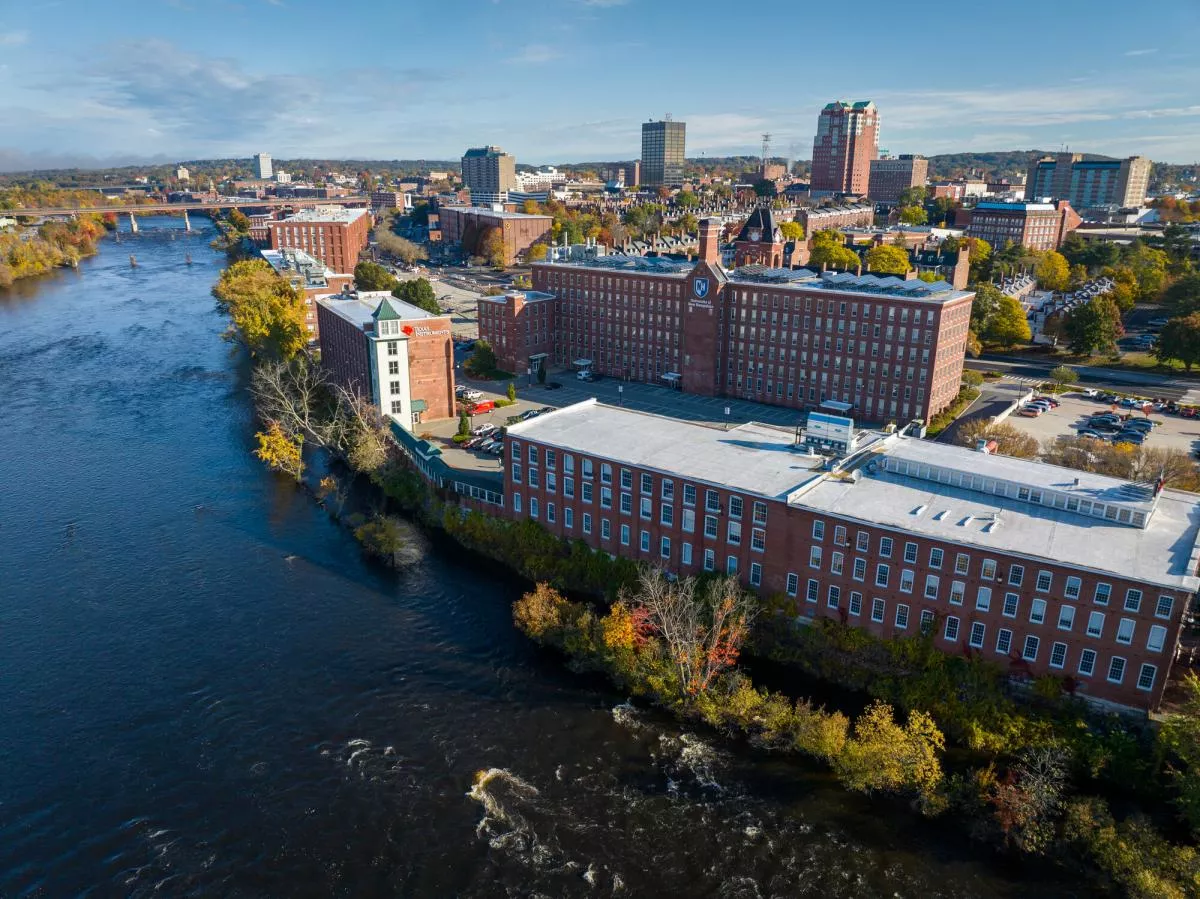
Aerial view of the Millyard mill buildings along the Merrimack River in Manchester, New Hampshire

Working Together

A community isn't a network. It's infrastructure.

In regenerative medicine, the science doesn't fail in the lab. It fails in the space between, where manufacturing readiness, workforce capacity, regulatory navigation, and clinical adoption all have to converge at once. No single organization can build all of that. But a community of aligned partners can.

ReGen Valley's community is not a list of logos. It is a working ecosystem: industry, academia, startups, health systems, workforce educators, and civic organizations operating in coordination because patient impact requires all of them.

A community member isn't a passive supporter. Each brings capability, capacity, talent, or connection that makes the system more complete. And when the system works, the benefits extend beyond the lab creating careers, strengthening households, and expanding economic opportunity across the region.

Doc note: Need to show ReGen Valley = the connector / enabler. Members = the ones doing the work.

Manufacturing is where breakthroughs become real.

A therapy that works in a lab is not yet a therapy. The distance between those two things is manufacturing, and it's the hardest part of the pathway to build.

Manufacturing regenerative technologies requires precision, reproducibility, regulatory compliance, supply chain resilience, and a trained workforce to sustain it. These aren't small requirements. They're why most promising therapies don't make it, not because the science fails, but because the production pathway isn't ready.

The ReGen Valley ecosystem is building that pathway here, in Manchester, across Southern New Hampshire, and with partners whose combined capabilities cover every requirement.

What it requires

Why it matters

Quality Systems

Ensures every therapy meets the standard that puts it in a patient safely

Regulatory Expertise

Navigating FDA and approval pathways without losing time or momentum

Workforce Depth

Trained people who can operate, maintain, and scale production reliably

Supply Chain Readiness

Raw materials, cold chain, and logistics that don't become the bottleneck

Repeatability at Scale

The ability to produce not just one treatment but thousands, consistently

Manufacturing is the bridge. We're building it.

The partners making it possible.

More than 80 organizations across Southern New Hampshire and beyond have aligned their work with the ReGen Valley ecosystem. They span every layer of the manufacturing pathway and together form something no single institution could build alone.

Category filters

  • Industry
  • Research and Academia
  • Workforce and Education
  • Health and Clinical
  • Public Sector
  • Startups and Emerging Companies
  • Community and Civic

Label: [Consortium Members] — confirm terminology before publishing

  • [Logo]
  • [Logo]
  • [Logo]
  • [Logo]
  • [Logo]
  • [Logo]
  • [Logo]
  • [Logo]
  • [Logo]
  • [Logo]
  • [Logo]
  • [Logo]

Participation in the ReGen Valley ecosystem does not imply endorsement of specific products, services, or positions. Consortium membership reflects shared commitment to advancing regenerative medicine manufacturing in Southern New Hampshire.

Coming

Network graphic

This is the network that closes the gap. A one-off graphic, designed with the interesting pieces.

The work isn't coming. It's happening.

Initiative 1: Biomanufacturing Scale Initiative

The challenge

Promising regenerative technologies often lack the manufacturing process development needed to move from small-scale research to reproducible production.

The approach

A coordinated program connecting researchers with manufacturing expertise, process development support, and quality system frameworks.

Stage

[Active / In development — confirm]

Who's involved

[Research institution + manufacturing partner]

What success means

Researchers leave with a manufacturable process. Manufacturers gain new production partnerships. Patients gain faster timelines.

Next milestone

[Confirm]

Initiative 2: Workforce Pipeline Program

The challenge

The biomanufacturing workforce pipeline doesn't yet exist at the scale the region needs, and it won't unless it's actively built.

The approach

Stackable credentials, apprenticeship pathways, and industry-informed curriculum developed in collaboration with community colleges, universities, and employer partners.

Stage

[Launched / Active — confirm]

Who's involved

[Education partners + industry employers]

What success means

Students and career-changers enter the biomanufacturing field with credentials that lead directly to jobs. Employers find a trained, local workforce. And a growing industry creates opportunity that moves through every corner of the community.

Next milestone

[First cohort / graduation milestone — confirm]

Initiative 3: Clinical Translation Partnership

The challenge

Moving a technology from research-stage to clinical application requires clinical partner engagement, regulatory navigation, and market access planning, all at once.

The approach

A structured collaboration connecting innovators with health system partners, clinical advisors, and reimbursement expertise.

Stage

[In development — confirm]

Who's involved

[Health system + research partner + regulatory advisor]

What success means

Technologies reach clinical trials faster. Patients in Southern New Hampshire gain earlier access to emerging therapies through their existing care networks.

Next milestone

[Confirm]

Coming

CTA band

Every challenge the pathway faces is a place where you can help. Shared with the homepage closing CTA, designed in the homepage pass.